Minnesota Lawyer and Finance & Commerce – Partner Content
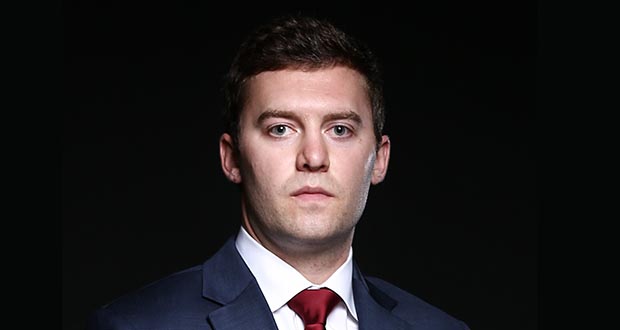
Author: William Paterson
Ownership disputes in privately held companies are nothing new in Minnesota. From disputes between shareholders in a corporation to members in a limited liability company to partners in a partnership, the central themes generally remain the same—what are the owners’ rights and obligations to one another, and what relief is appropriate if those rights or obligations have been violated.
But what would happen under Minnesota law in an ownership dispute in which the type of entity is not even officially recognized? With the recent advent of decentralized autonomous organizations (DAOs), we may find out sooner rather than later.
DAOs are entities established through blockchain. The general premise is that a group of people—often referred to as “tokenholders”—combine their resources for a centralized goal (anything from buying art collections to advocating for social justice reform). As may be obvious from the name, a DAO’s ownership and governance are decentralized. There is no CEO, nor is there a board of directors. Instead, the entity is controlled, collectively, by the tokenholders. The decision-making process, including the decisions to be voted on, are governed by a smart contract, which is a coded agreement between the owners.
The aspects that create a DAO’s unique and flexible nature, however, are the same aspects that create uncertainty if a dispute arises between the owners. Indeed, because Minnesota does not officially recognize DAOs, it is unclear what the owners’ rights and obligations to one another would even be. And this isn’t just a philosophical issue; the type of entity materially impacts ownership disputes. From establishing fiduciary duties to one’s right to information, one’s status as a shareholder compared to a member compared to a partner matters.
So what existing entity type fits best?
Because a DAO consists of tokenholders, similar to shareholders, the initial reaction may be to treat the entities as corporations. Indeed, DAOs are sometimes even referred to as decentralized autonomous corporations. But while ownership structure appears to be similar, the governance structure of corporations and DAOs are completely different. As mentioned above, unlike corporations, DAOs do not have boards or officers. Instead, the governance is vested in the tokenholders. As a result, applying the same rights and obligations to tokenholders as those of shareholders may not be appropriate.
Another option would be to treat the tokenholders the same as members of an LLC. In 2022, this theory gained some traction as Wyoming became the first state to statutorily recognize DAOs as distinct entities and elected to treat DAOs as LLCs. When considering the laws applicable to LLCs, the theory makes sense. Similar to LLCs, DAOs are based on contract. That is, similar to how an LLC members’ rights and obligations are governed by a member control agreement, tokenholders’ rights and obligations are governed by smart contracts. In addition, similar to members in a member-managed LLC, the governance of DAOs is placed with the tokenholders. That is, in both entities, the same parties make up the ownership and governance. Still, unless DAOs are officially recognized under Minnesota law, the similarities between LLCs and DAOs may be irrelevant because an LLC can only be formed when the articles of organization are filed with the secretary of state. If a DAO does not have articles or if the state does not recognize the entity, then it—and the tokenholder’s corresponding rights and obligations—may never be officially established under the law.
If a DAO is not treated as a corporation or LLC, then the only other option may be a partnership. Under Minnesota law, partnerships require substantially less formality; nothing needs to be filed with the state and no written agreement needs to be in place. Still, even comparing partnerships to DAOs has its limitations. In particular, the purpose of a DAO is generally not to generate a profit whereas the fundamental purpose of a partnership is carrying on a business for profit. In the end, the informal nature of a DAO may not fit the informal nature of a partnership.
With no clear match in place, it remains to be seen how DAOs will be treated under Minnesota law. And until it is determined how DAOs will be treated, there will be uncertainty with any dispute between the owners. What is certain, though, is that how DAOs are classified will dramatically impact the rights and obligations of tokenholders that often dictate the outcome of an ownership dispute.
William Paterson is an attorney with Anthony Ostlund Louwagie Dressen & Boylan P.A. He represents clients in a broad range of business disputes in both state and federal court. He can be reached at wpaterson@anthonyostlund.com.